

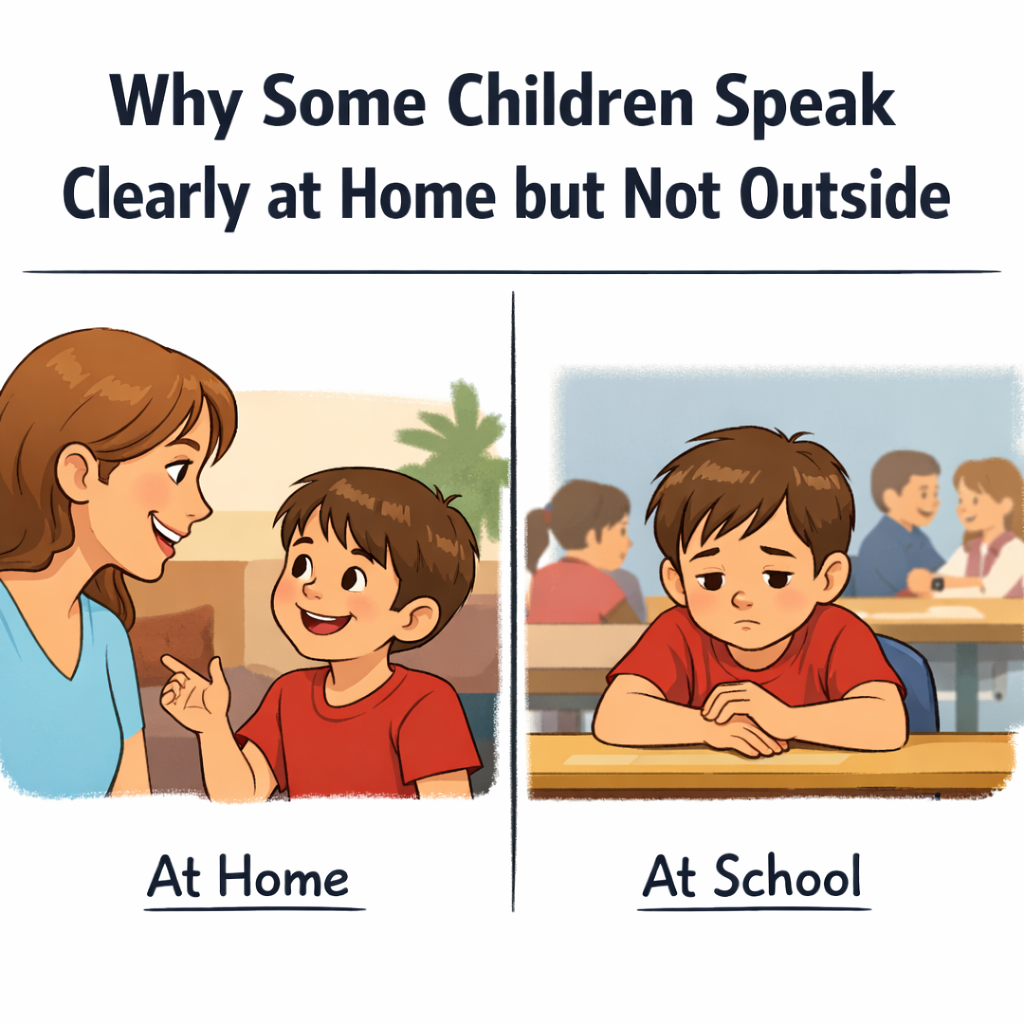
Why Children Speak at Home but Not Outside is a concern many parents notice as their child grows. A child may communicate comfortably with family but become quiet or hesitant in school or social settings. This difference is often linked to confidence, familiarity, and emotional comfort rather than ability. Understanding the reasons behind this can help parents support their child more effectively.
At Belief Shaping Therapies, Dubai, we help families understand that this difference is often linked to comfort, confidence, and emotional readiness.
Why This Happens
Children may feel:
- Anxious in unfamiliar settings
- Unsure of social expectations
- Overwhelmed by group environments
- Less confident speaking to unfamiliar people
This behaviour is not refusal, but a response to feeling unsafe or unsure.
The Role of Familiar Environments
At home, children feel relaxed and supported. Outside, they must process new people, rules, and expectations, which can feel overwhelming.
How Parents Can Support
- Avoid forcing the child to speak
- Encourage small interactions
- Build familiarity gradually
- Reinforce confidence gently
Pressure can increase anxiety, while support builds comfort.
How Therapy Helps
Therapy provides a structured and supportive environment where children can gradually build communication confidence without pressure. At the right pace, children are guided to practise speaking, responding, and interacting in ways that feel safe and manageable.
Speech therapy helps strengthen expressive language and conversational skills, while also supporting children in understanding social cues and interactions. Over time, with consistent guidance and positive reinforcement, children become more comfortable expressing themselves not just in therapy sessions, but also in school and social settings.
At Belief Shaping Therapies, Dubai, therapy supports:
- Communication confidence
- Emotional regulation
- Social interaction skills
Children are guided in safe, structured environments before generalising skills outside.
Building Confidence Over Time
Building confidence in communication takes time, especially for children who feel unsure in unfamiliar environments. Instead of expecting immediate changes, it is important to focus on small, consistent steps. Children may begin by responding non-verbally, using gestures, or speaking in short phrases before gradually becoming more comfortable expressing themselves. Creating low-pressure opportunities to interact can help them feel safe without the fear of being judged or rushed.
Consistency and patience play a key role in this process. When children are supported without pressure, they are more likely to take initiative at their own pace. Encouraging familiar routines, practising social interactions in comfortable settings, and celebrating even small efforts can make a meaningful difference. Over time, these experiences help children build trust in their abilities and reduce hesitation in new environments.
With the right support and understanding, children can gradually develop the confidence to communicate beyond familiar spaces, allowing their true abilities to shine in different settings.