

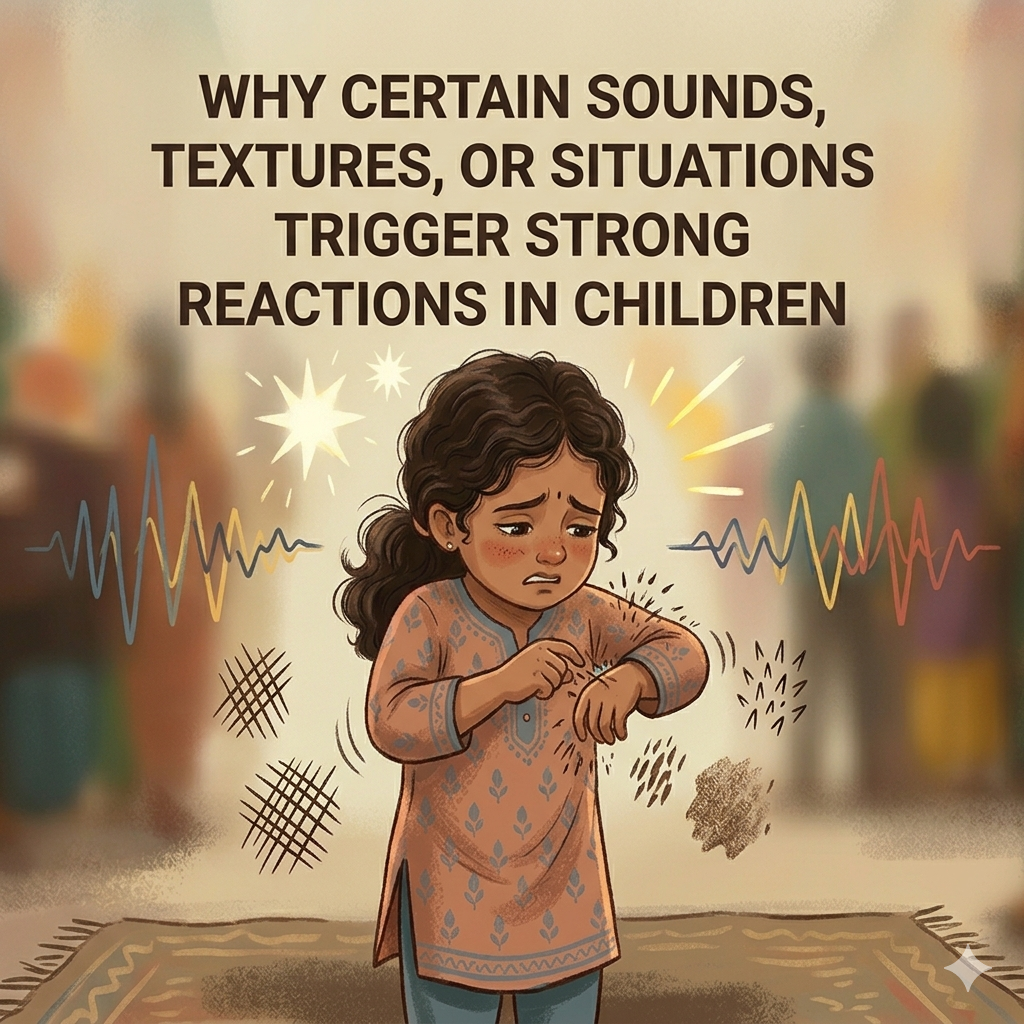
Why certain sounds, textures, or situations trigger strong reactions in children is something many parents notice but often struggle to fully understand. A child may cover their ears at everyday sounds, refuse certain clothing, avoid crowded places, or react intensely to situations that seem manageable to others.
At Belief Shaping Therapies, Dubai, we often help families understand that these reactions are not about behaviour or defiance, they are closely linked to how a child processes sensory input.
Understanding Sensory Processing
Every child processes sensory information differently. The brain constantly receives input from the environment through:
- Sound
- Touch
- Sight
- Movement
- Smell
For most children, this information is organised and filtered automatically. However, for some children, sensory input can feel too intense, too overwhelming, or sometimes even too dull.
This difference in processing can lead to strong reactions.
What Is Sensory Over-Responsiveness?
Some children are highly sensitive to sensory input. This means that everyday experiences may feel exaggerated or uncomfortable.
For example:
- A normal sound may feel too loud
- Clothing tags may feel irritating
- Bright lights may feel overwhelming
- Crowded spaces may feel chaotic
These experiences are real for the child, even if they are not visible to others.
Common Triggers Parents Notice
1. Sounds
Vacuum cleaners, traffic, loud voices, or even sudden noises can feel overwhelming.
2. Textures
Certain fabrics, food textures, or surfaces may be avoided.
3. Environments
Crowded places, busy classrooms, or unfamiliar spaces may lead to discomfort.
4. Unexpected Changes
New situations or changes in routine can increase sensory stress.
How These Reactions Show Up
Children may:
- Cover their ears
- Refuse certain clothes or foods
- Avoid specific places
- Become irritable or overwhelmed
- Have emotional outbursts
These responses are often protective; the child is trying to manage discomfort.
Why It Is Often Misunderstood
These reactions are sometimes seen as:
- “Being difficult”
- “Overreacting”
- “Not adjusting”
But in reality, the child is responding to how their body is experiencing the environment.
The Emotional Impact
When children repeatedly feel overwhelmed, it can lead to:
- Anxiety
- Avoidance of situations
- Difficulty with routines
- Reduced participation in daily activities
This can affect both confidence and independence.
How Therapy Supports Sensory Regulation
At Belief Shaping Therapies, Dubai, occupational therapy focuses on helping children:
- Understand sensory input
- Build tolerance gradually
- Develop coping strategies
- Feel more in control of their environment
Therapy is structured, gradual, and always tailored to the child’s comfort level.
Supporting Your Child at Home
Parents can help by:
- Identifying triggers
- Creating predictable routines
- Preparing children for new environments
- Allowing breaks when overwhelmed
- Using calming strategies
The goal is not to remove all challenges, but to help the child manage them.
Building Tolerance Over Time
Sensory tolerance does not develop overnight.
With consistent support, children can gradually:
- Feel less overwhelmed
- Participate more comfortably
- Build confidence in different environments
Final Thoughts
Strong reactions to sensory experiences are not behavioural problems, they are sensory responses.
When we understand this, we shift from trying to “correct” behaviour to supporting the child in a way that truly helps.