

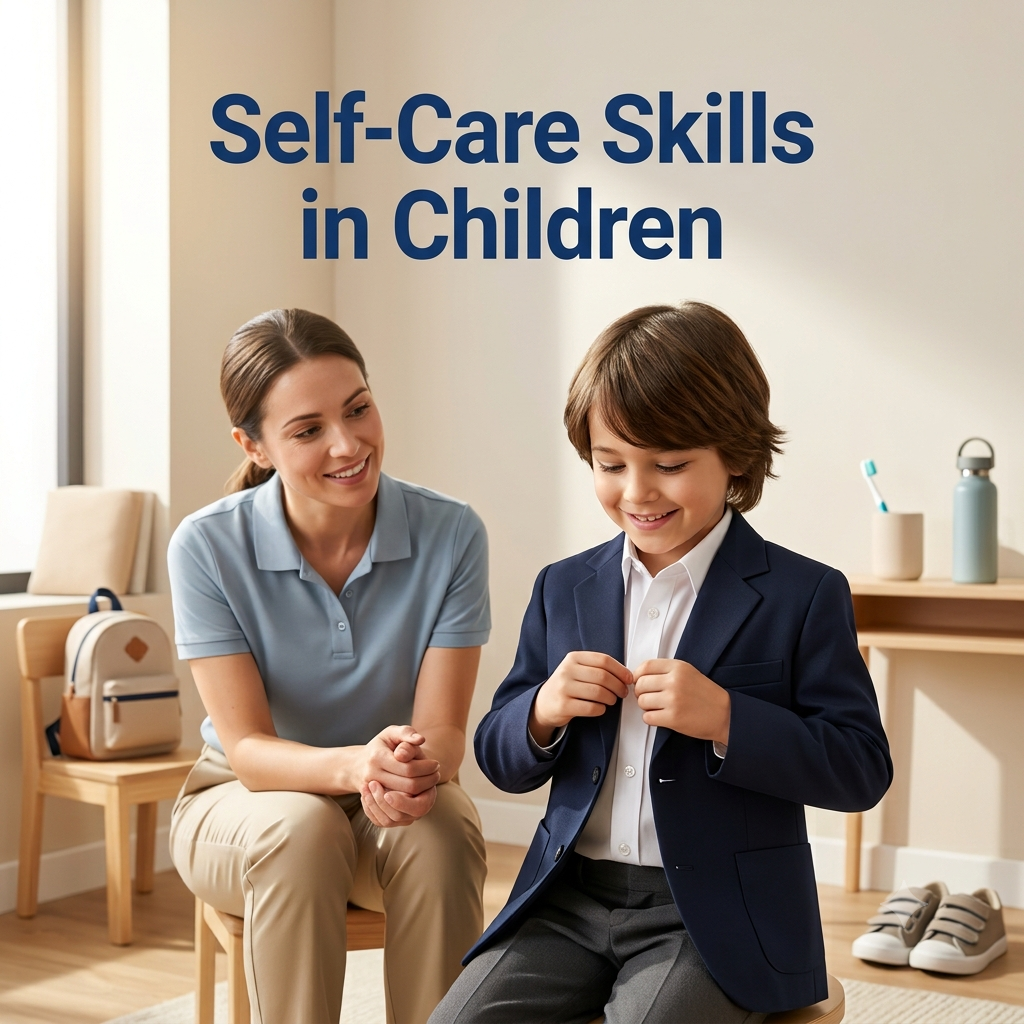
Every parent dreams of seeing their child become more confident and independent. From brushing their teeth to getting dressed for school, these everyday routines are important milestones in a child’s development. These are known as self-care skills, and they play a vital role in helping children participate successfully at home, in school, and within their community.
While some children naturally learn these skills through observation and practice, others may find them challenging. Children with Autism Spectrum Disorder (ASD), ADHD, sensory processing differences, developmental delays, or motor coordination difficulties may require additional support to master everyday tasks. The good news is that, with the right guidance and early intervention, self-care skills can be developed step by step.
At Belief Shaping Therapies, we believe that every small achievement contributes to a child’s confidence, independence, and quality of life.
What Are Self-Care Skills?
Self-care skills, also called Activities of Daily Living (ADLs), are the everyday tasks children perform to care for themselves.
These include:
- Dressing independently
- Buttoning and zipping clothes
- Brushing teeth
- Washing hands and face
- Eating with a spoon or fork
- Drinking from an open cup
- Using the toilet independently
- Wearing shoes correctly
- Packing a school bag
- Managing simple daily routines
Although these tasks may seem simple, they involve coordination, balance, planning, sensory processing, attention, and fine motor control working together.
Why Are Self-Care Skills Important?
Developing self-care skills gives children much more than independence.
These skills help children:
- Build self-confidence
- Develop responsibility
- Participate more independently at school
- Improve fine and gross motor coordination
- Strengthen problem-solving skills
- Reduce frustration during daily routines
- Feel proud of their accomplishments
As children become more capable of managing everyday tasks, they also develop greater confidence in trying new experiences.
Signs Your Child May Need Additional Support
Every child develops at their own pace, but some signs may indicate that extra guidance could be beneficial.
Your child may:
- Need significant help getting dressed beyond the expected age
- Avoid brushing teeth or washing hands
- Struggle to use cutlery during meals
- Have difficulty fastening buttons or zippers
- Frequently spill food or drinks
- Resist grooming activities such as hair brushing or nail cutting
- Become frustrated during simple routines
- Depend on adults for most daily tasks
These challenges are often linked to underlying developmental skills rather than unwillingness to participate.
What Can Make Self-Care Difficult?
Several factors influence a child’s ability to perform everyday tasks independently.
Fine Motor Difficulties
Activities such as buttoning clothes, holding a toothbrush, or using cutlery require good finger strength and coordination.
Children with weak fine motor skills often find these tasks tiring or frustrating.
Sensory Processing Differences
Some children are highly sensitive to certain textures, sounds, temperatures, or smells.
They may dislike:
- Toothpaste
- Hair brushing
- Certain clothing fabrics
- Washing their face
- Wearing socks or shoes
Understanding these sensory preferences helps therapists develop strategies that make self-care activities more comfortable.
Motor Planning Challenges
Motor planning is the brain’s ability to organise and carry out movements.
Children with motor planning difficulties may understand what they need to do but struggle to perform the sequence of movements required for dressing, eating, or grooming.
Attention and Executive Functioning
Completing a morning routine requires children to remember multiple steps, stay focused, and organise their actions.
Children with ADHD or executive functioning challenges may need support in developing these routines.
How Therapy Can Help
At Belief Shaping Therapies, our multidisciplinary team works together to help children become more independent in their everyday lives.
Occupational Therapy
Occupational Therapy focuses on developing the physical and sensory skills needed for daily living.
Therapy may help improve:
- Fine motor skills
- Hand strength
- Bilateral coordination
- Motor planning
- Sensory regulation
- Body awareness
- Independence during dressing, feeding, and grooming
Activities are designed to be fun, engaging, and meaningful while building practical life skills.
Speech Therapy
Communication also plays an important role in self-care.
Speech Therapy can help children:
- Understand daily instructions
- Follow routines
- Request assistance appropriately
- Develop sequencing and language skills needed for everyday activities
ABA Therapy
For children with Autism Spectrum Disorder, ABA Therapy helps teach self-care routines using structured, step-by-step learning.
Children learn skills such as:
- Washing hands independently
- Dressing in the correct sequence
- Brushing teeth
- Packing school materials
- Completing routines with less prompting
These skills are reinforced through consistent practice and positive encouragement.
Simple Ways Parents Can Encourage Independence
Parents can help children build self-care skills through everyday opportunities.
Some practical strategies include:
- Break large tasks into smaller, manageable steps.
- Use picture schedules or visual reminders.
- Allow extra time instead of rushing.
- Encourage children to try independently before offering help.
- Praise effort rather than perfection.
- Practise the same routines consistently each day.
- Make learning enjoyable through songs, games, or rewards.
Small daily successes gradually build confidence and independence.
When Should Parents Seek Professional Support?
It may be beneficial to seek professional guidance if your child:
- Continues struggling with everyday self-care beyond their developmental stage
- Avoids grooming or dressing activities because of sensory sensitivities
- Becomes distressed during daily routines
- Has difficulty learning new self-care tasks despite regular practice
- Has been diagnosed with Autism, ADHD, developmental delay, or other developmental conditions affecting independence
Early intervention can help children develop lifelong skills that improve participation at home, school, and in the community.
Building Confidence Through Everyday Independence
Learning to complete everyday tasks independently is an important part of a child’s development. Every button fastened, every meal eaten independently, and every successful morning routine helps build confidence, responsibility, and self-esteem.
At Belief Shaping Therapies, our experienced team provides individualized Occupational Therapy, Speech Therapy, and ABA Therapy to help children develop the practical life skills they need for greater independence. Through evidence-based interventions and family-centred support, we empower children to achieve meaningful progress in their daily lives.
With patience, encouragement, and the right therapeutic support, every child can develop the skills they need to become more confident, capable, and independent.